He kept the house for thirty years and the house kept him. When he died there was little to inventory: a ring of keys, a drawer of receipts, and this — a leather notebook, spine cracked, filled front to back in a small deliberate hand.
Four leaves are reproduced here, in his English and his Italian both. Read them the way he wrote them: by the lamp, close to the page.
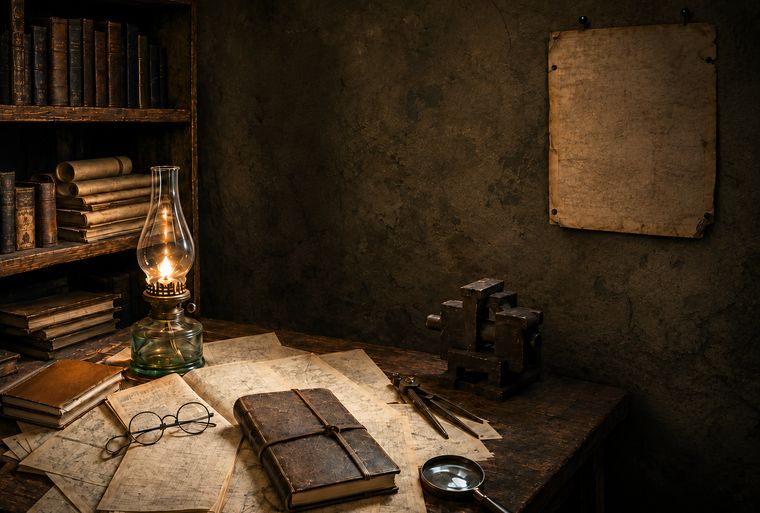
Where the entries were written.
A thousand paces from the church door, north along the old line. The Romans measured a mile by counting, and the count does not care what has grown over the road since. Nine hundred and eighty. A thousand. The marker should stand here. It does not. Either I have counted wrong, or the road is older than the count. — nov. 1966
The arc again. Third time now — the parish records, the boundary deed, and the stone itself. If it marks a boundary, a boundary of what? The word is plain enough. It is the rest that will not come up out of the ground. “Iter alone proves nothing.” — ott. 1968
The key opens nothing in this house. I have tried every door twice, and the cellar twice again. Non apre porte. Then why did someone make it heavy enough to matter? avis dormit — feb. 1969
The rest of the page is gone. It was gone before me — the tear is older than my hands. Whoever took it wanted the ending and not the beginning. That is worth thinking about. I have copied what remains, and I will keep copying until the ground gives me the sentence whole. — mar. 1970 · E.B.
Hold the page to bring the lamp close. Tug the dog-eared corner to turn.
Reproduced from the property's papers. The novel begins fifty-six years after the last entry.
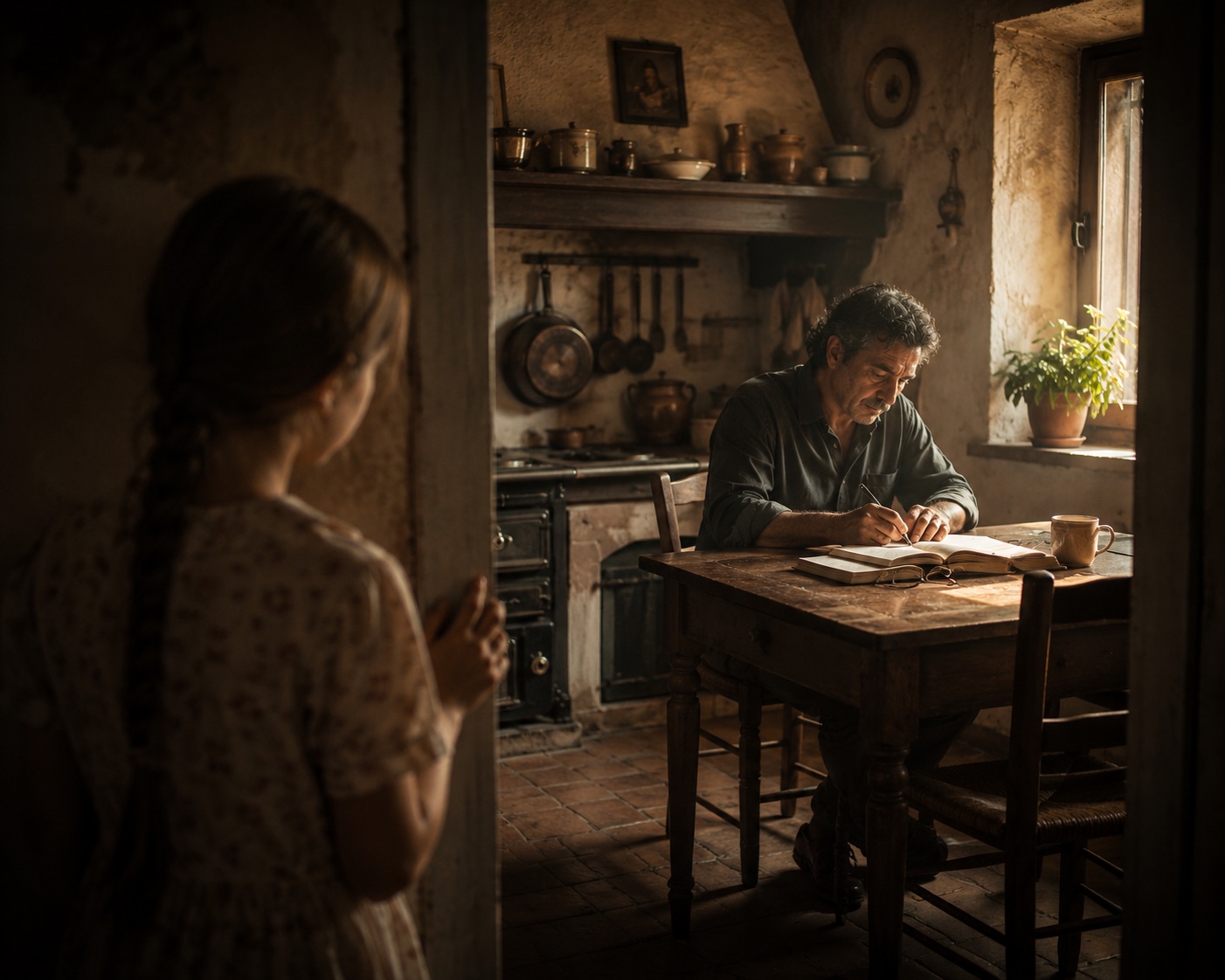
Front to back, in a small deliberate hand — and not always alone in the house.