Marko surveys old buildings for a living and remembers every room he has ever stood in. He has spent his working life finding out why buildings fail, and he has never investigated a death.
Finished. Coming soon.
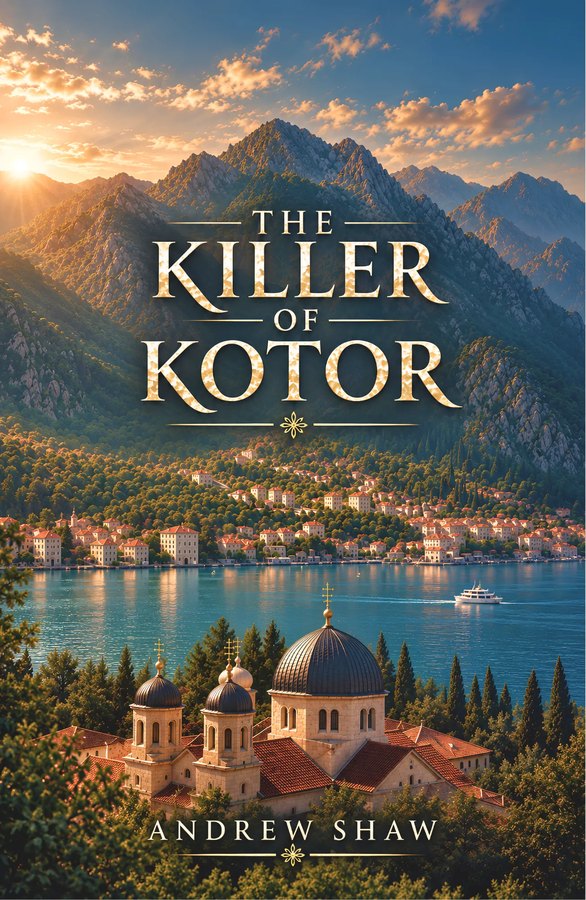
Kotor, Montenegro, August 2026. Paolo Ballarin, a visitor from Venice, brings an old key to Marko Jovanović’s office on St Luke’s Square. A week later Paolo is found dead in St John’s Fortress, high above the town.
From the back cover
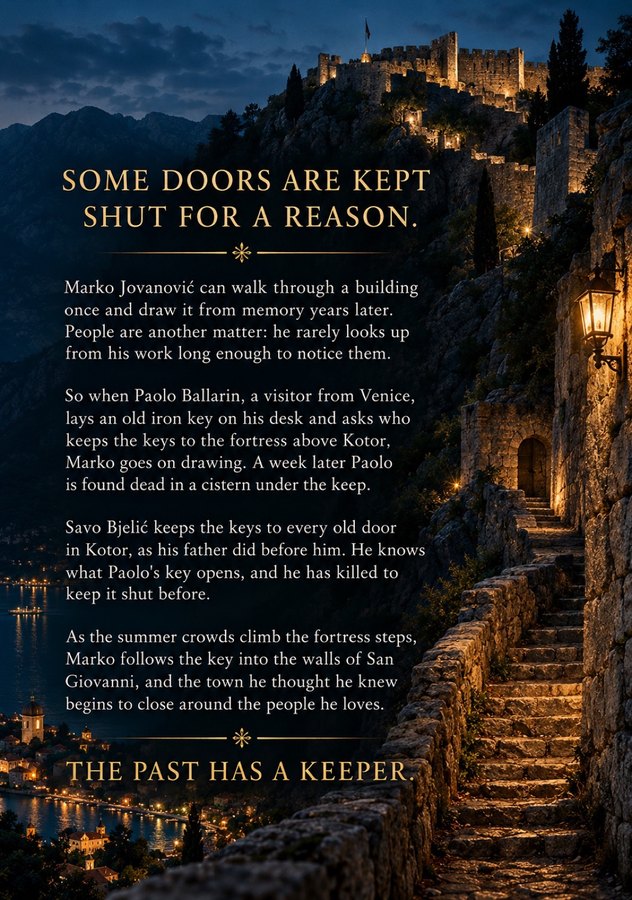
SOME DOORS ARE KEPT SHUT FOR A REASON.
Marko Jovanović can walk through a building once and draw it from memory years later. People are another matter: he rarely looks up from his work long enough to notice them.
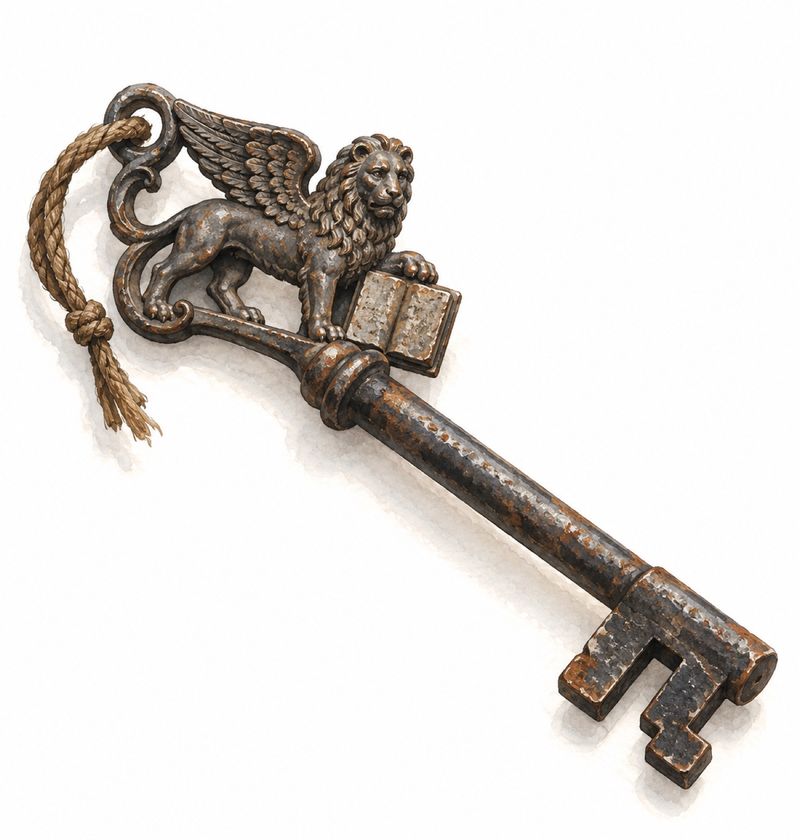
So when Paolo Ballarin, a visitor from Venice, lays an old iron key on his desk and asks who keeps the keys to the fortress above Kotor, Marko goes on drawing. A week later Paolo is found dead in a cistern under the keep.
Savo Bjelić keeps the keys to every old door in Kotor, as his father did before him. He knows what Paolo's key opens, and he has killed to keep it shut before.
As the summer crowds climb the fortress steps, Marko follows the key into the walls of San Giovanni, and the town he thought he knew begins to close around the people he loves.
THE PAST HAS A KEEPER.
Marko Jovanović
Forty-one, born in Kotor, and home since January after seventeen years in Venice.
Marko walks a street once and holds all of it: every door and window, every shutter left closed. He can stand in a room he last saw at nineteen and see what has moved. Faces and names are another matter: he recognises the people he knows, but he doesn't spend his attention on anyone else, and people take it personally.
He draws while people talk, to scale and hardly looking down, in a hardbacked notebook of squared paper with every page dated. People take it for rudeness; it is how he listens.
On a wet morning in August, Paolo Ballarin brought him the key and asked who kept the keys to the upper fortress. Marko drew the key actual size, both faces, wrote the question in his notebook to answer later, and never went back to it.
Maps
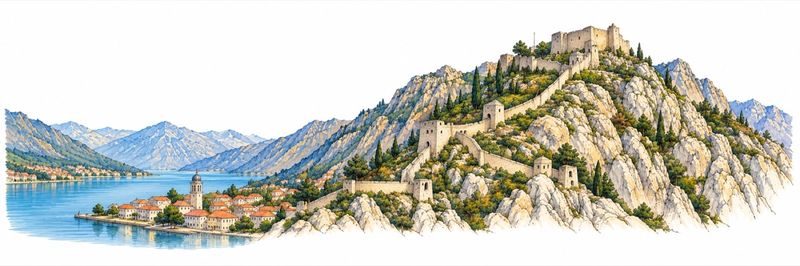
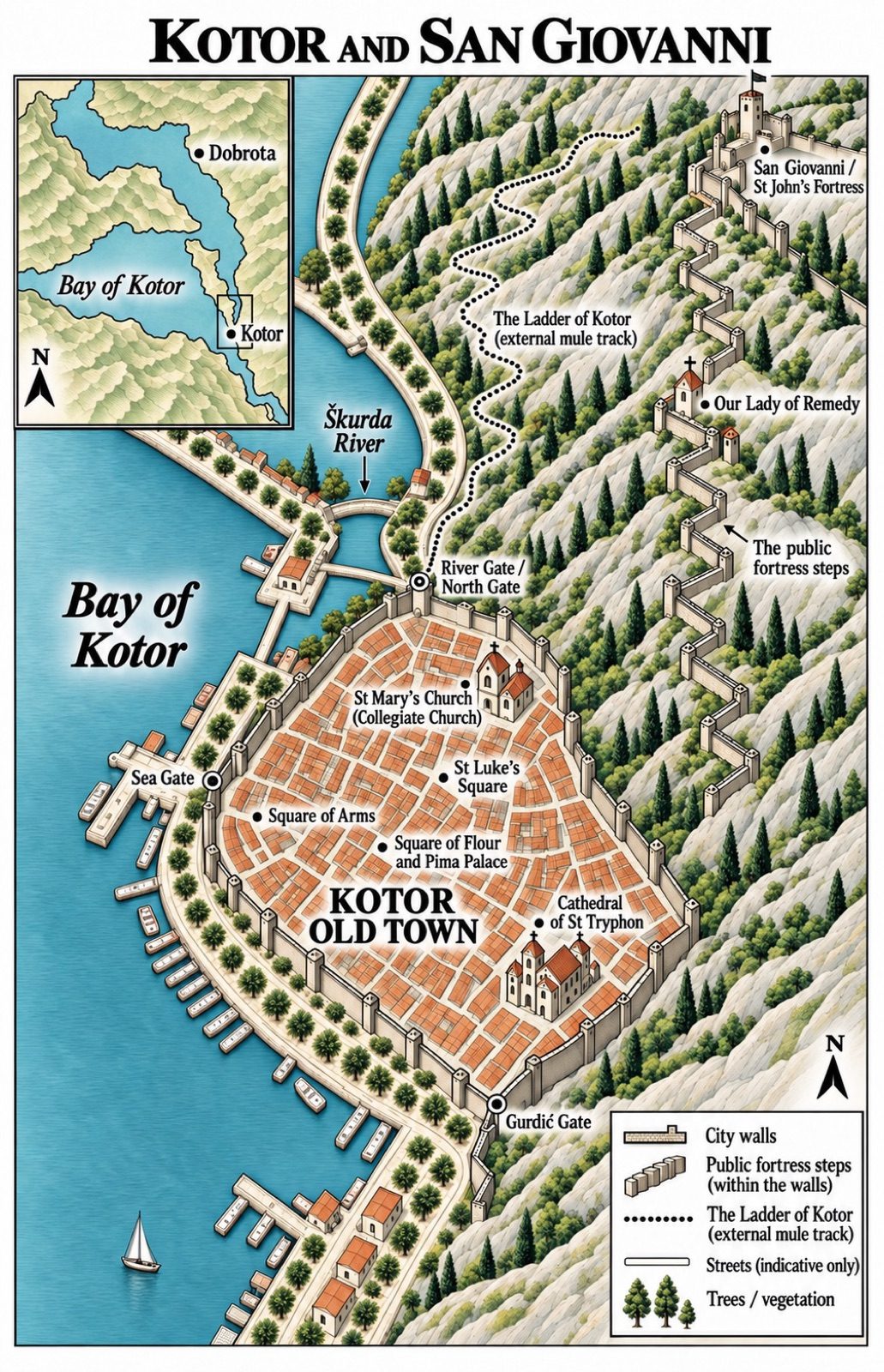
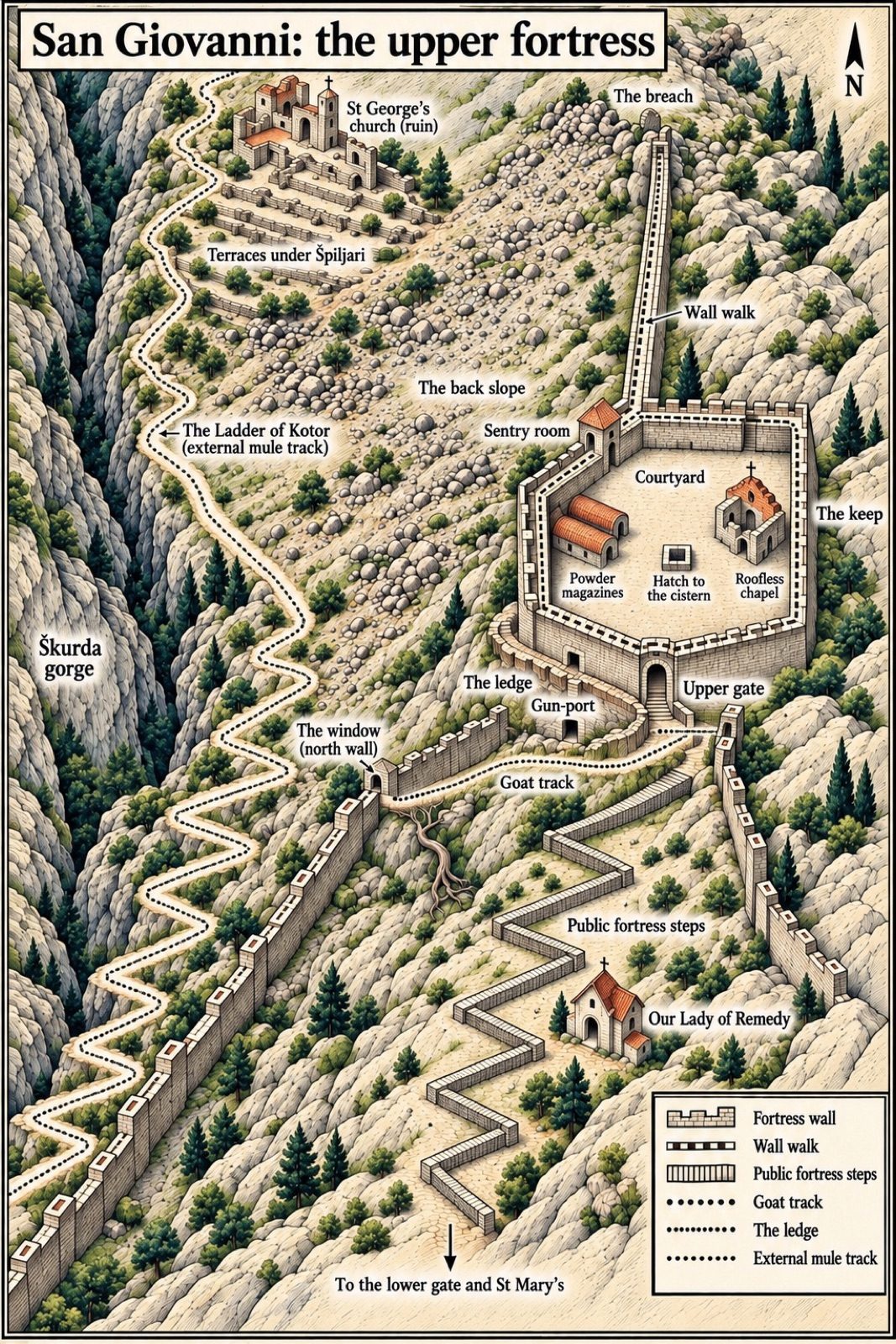
Kotor and San Giovanni: the walled old town on the Bay of Kotor, and the walls and steps climbing the mountain to the fortress.San Giovanni: the upper fortress.
San Giovanni
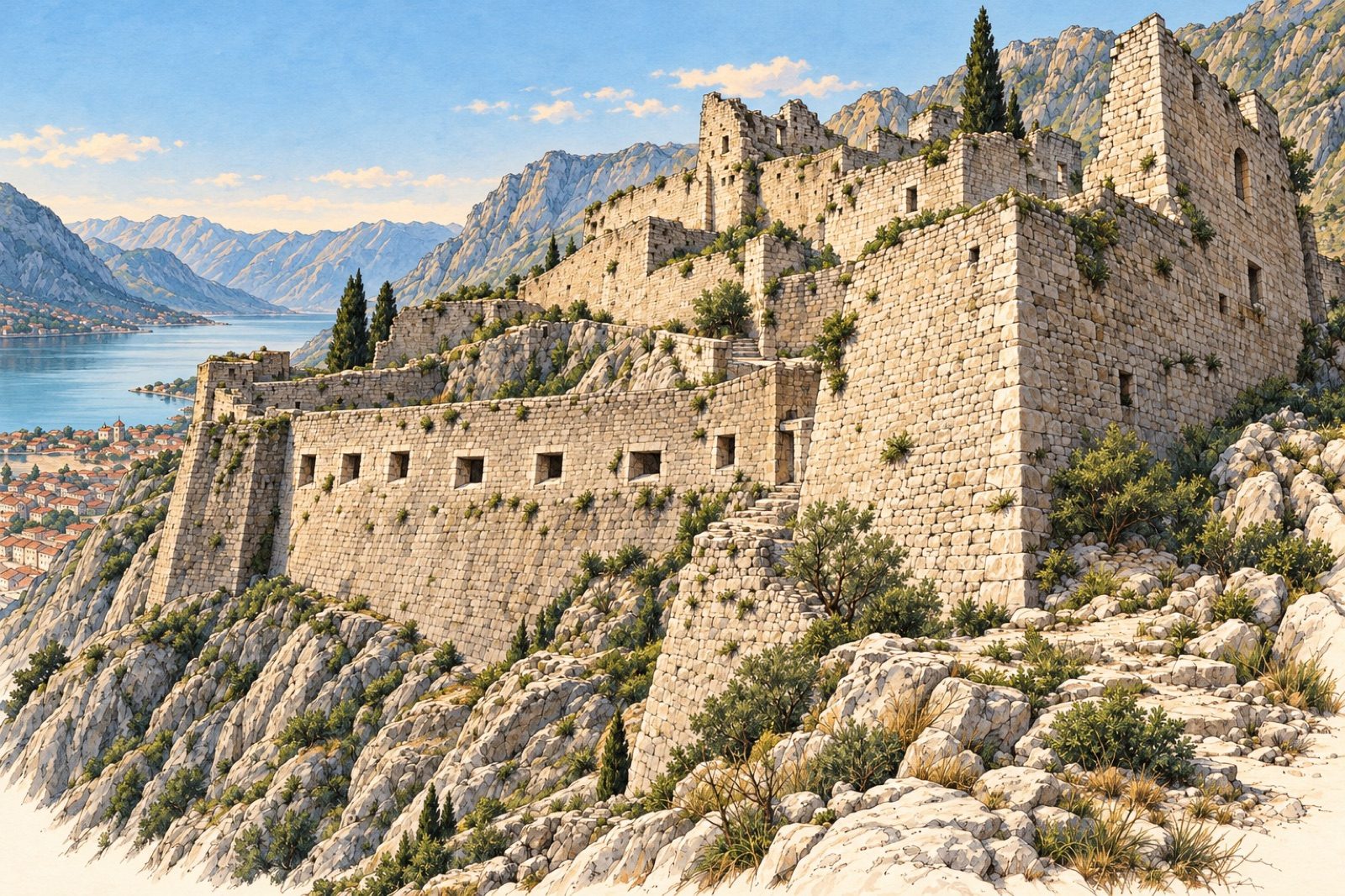
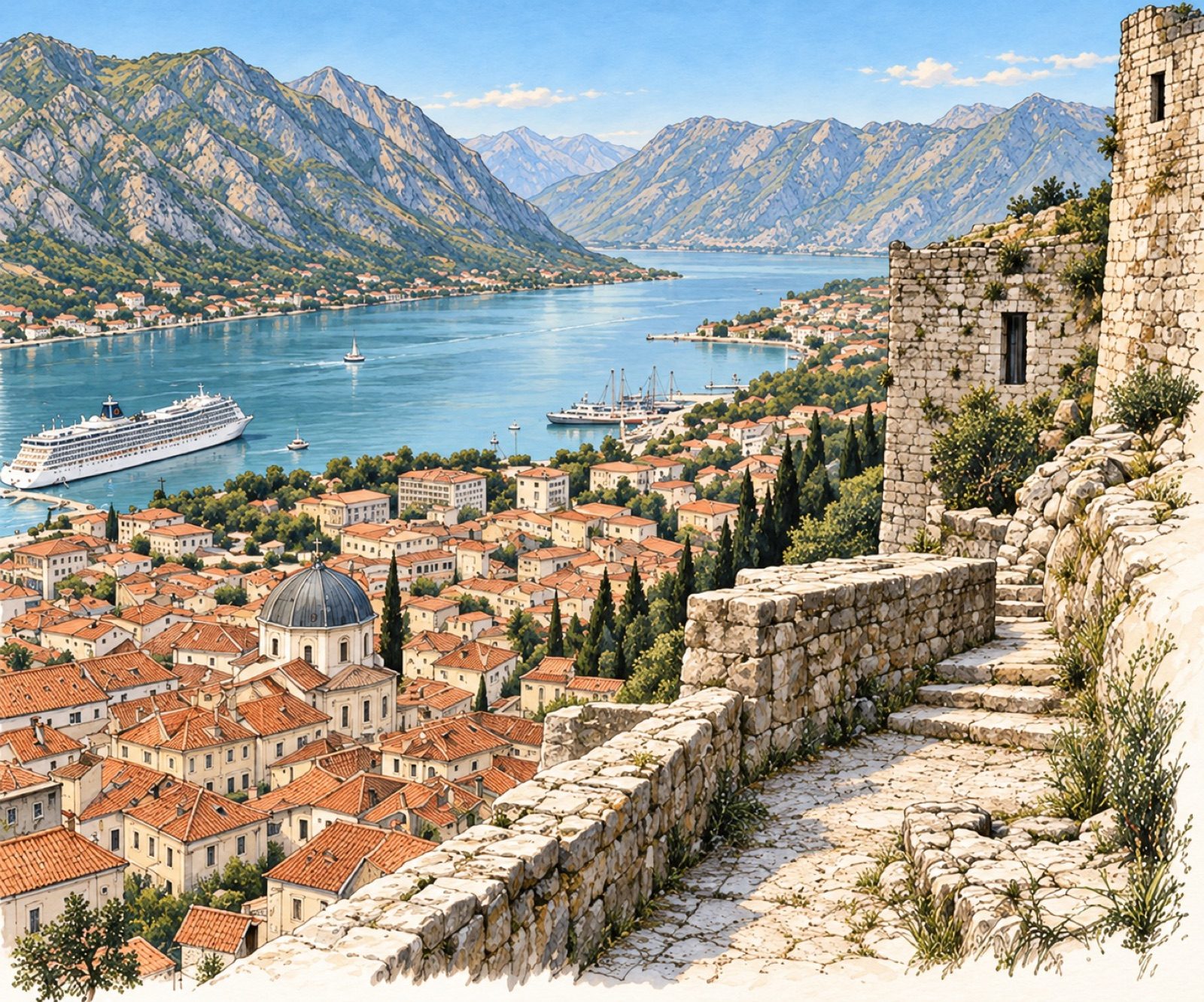
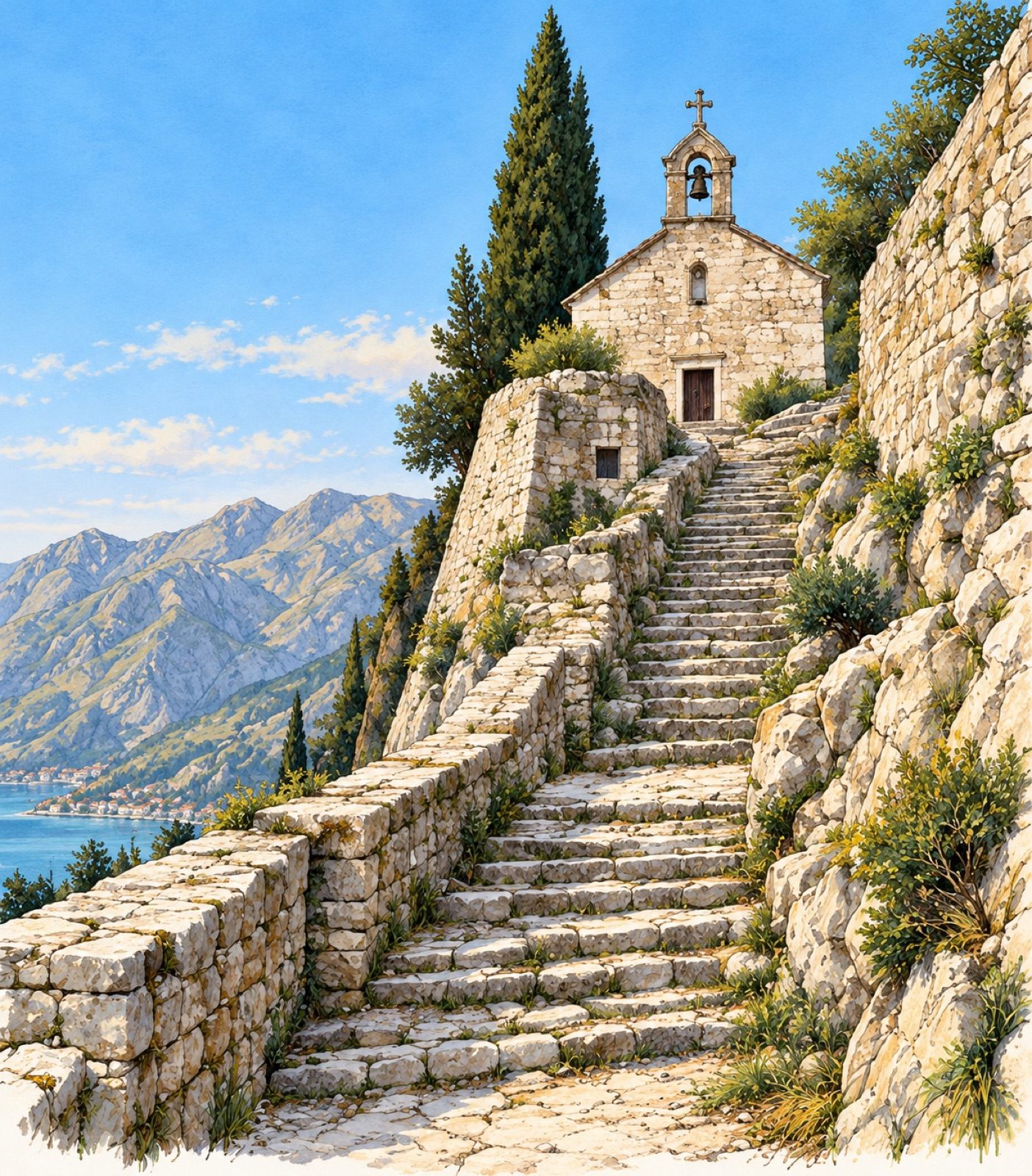
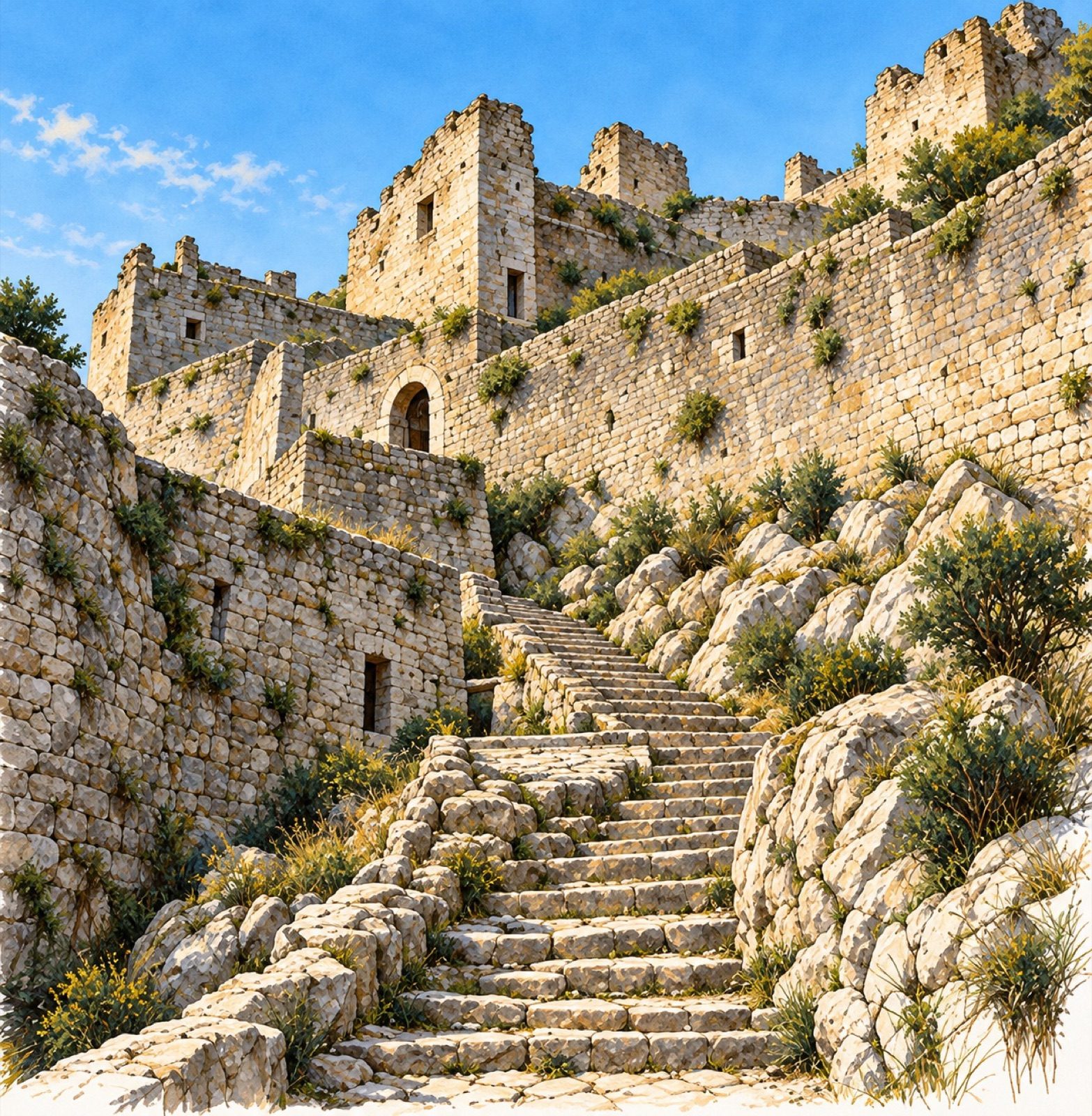
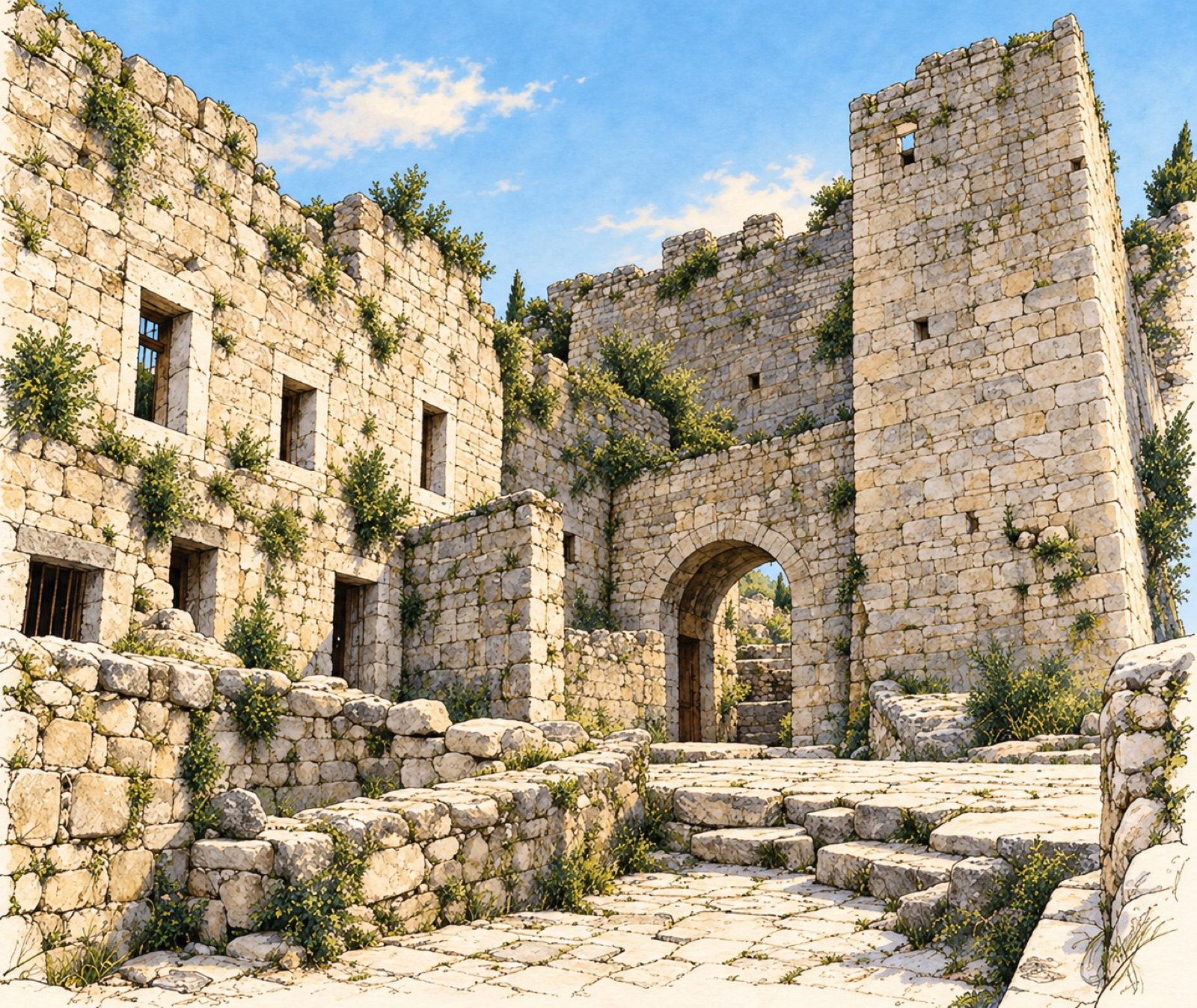
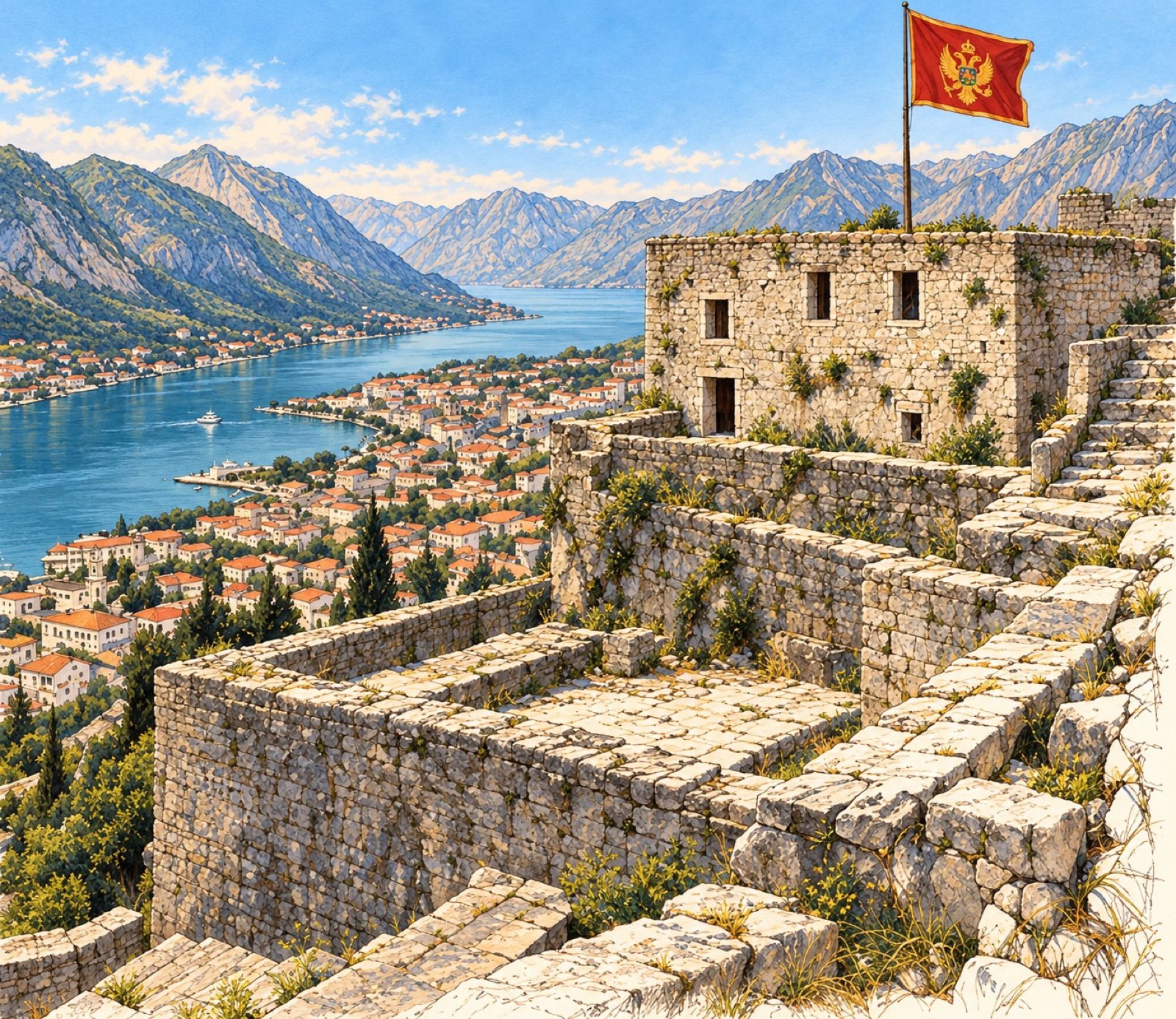
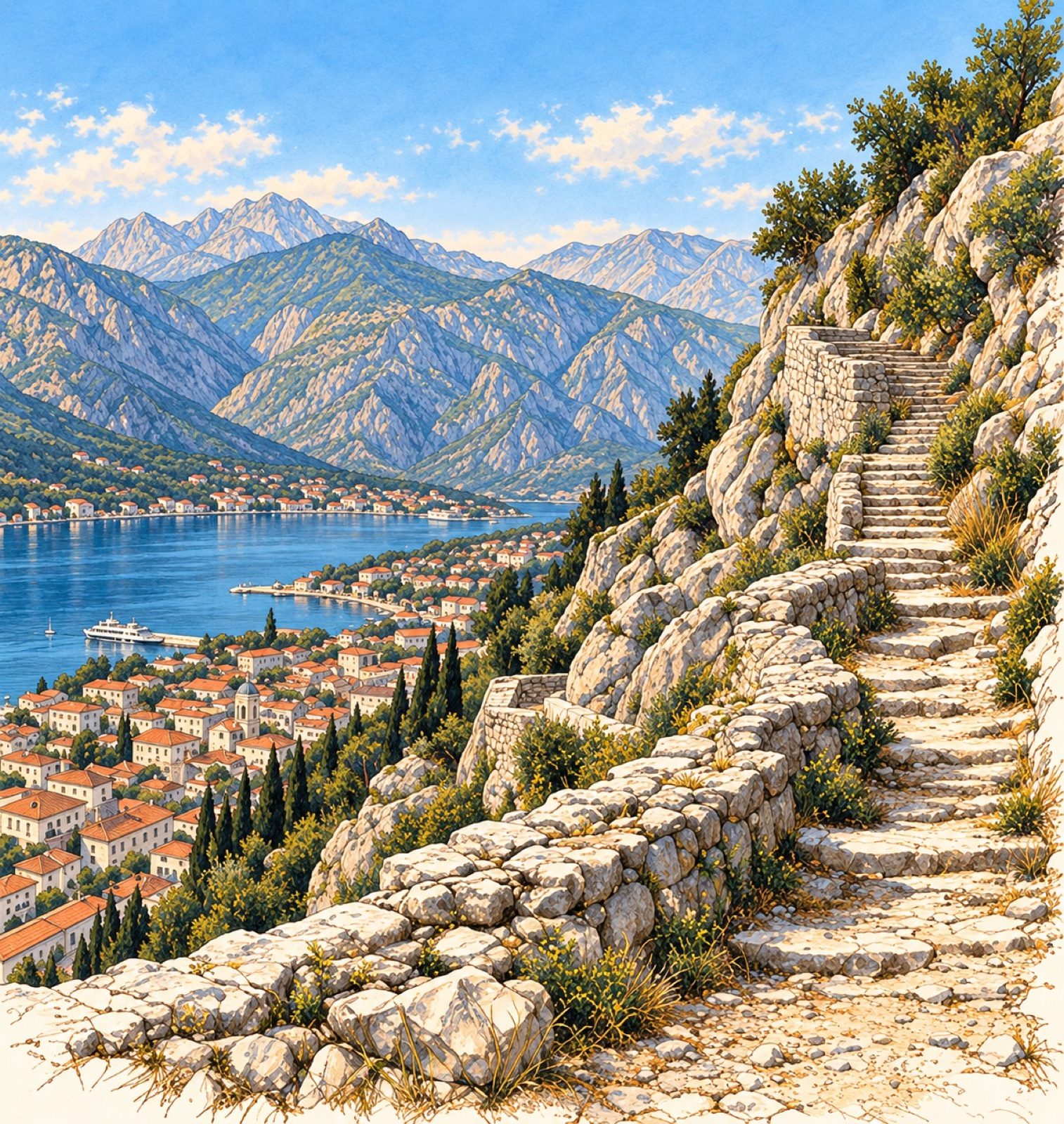
The fortress of San Giovanni above Kotor, its walls climbing the mountain from the back corners of the old town to the keep at the summit.The old town from the fortress walls, with the bay running inland between the mountains.The church of Our Lady of Remedy stands halfway up the fortress steps. Almost everyone who climbs to San Giovanni stops here to get their breath.The last flights of steps below the upper fortress, with the ruined walls of the keep above.Roofless rooms and powder magazines open off small stone courtyards. Much of it was built by the Venetians, who held Kotor for nearly four centuries.The keep, the fort at the summit, flies Montenegro's flag over the town.The mule track climbs the mountain outside the fortress walls in switchbacks. Hikers take it up to the ruined village of Špiljari and on to the pass.
Kotor
A walled Venetian town at the head of the Bay of Kotor, under the mountain.
Venice held Kotor for nearly four hundred years, and the winged lion of St Mark is still carved over the Sea Gate. Inside the walls the old town is a maze of stone lanes and small squares. Behind it the walls climb some 1,350 steps up the mountain to St John’s Fortress, San Giovanni to the Venetians, above the roofs.
Where the book began
This book began on my phone. I was scrolling back through my own pictures and came to the ones I took in Kotor in 2015.
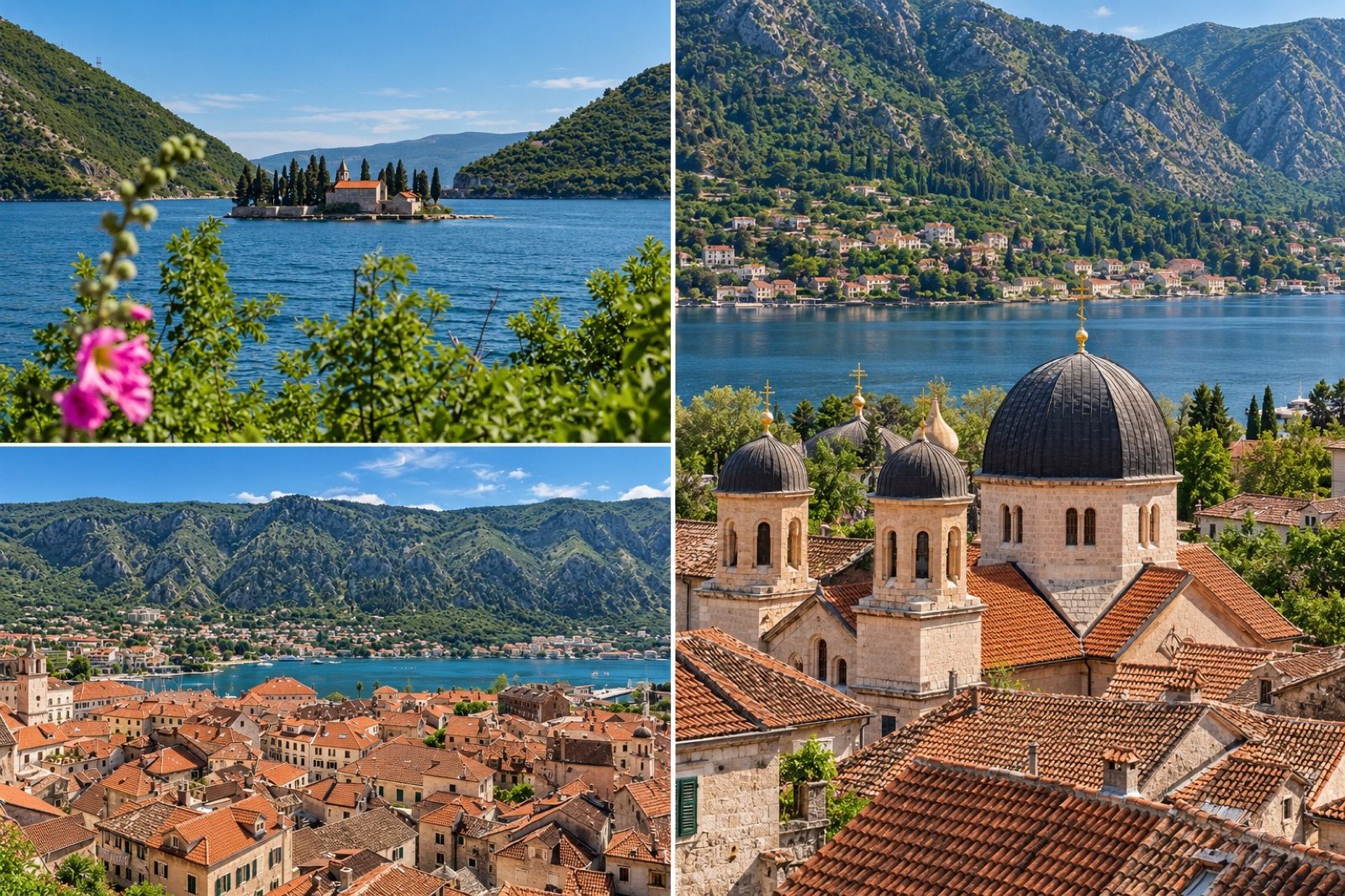
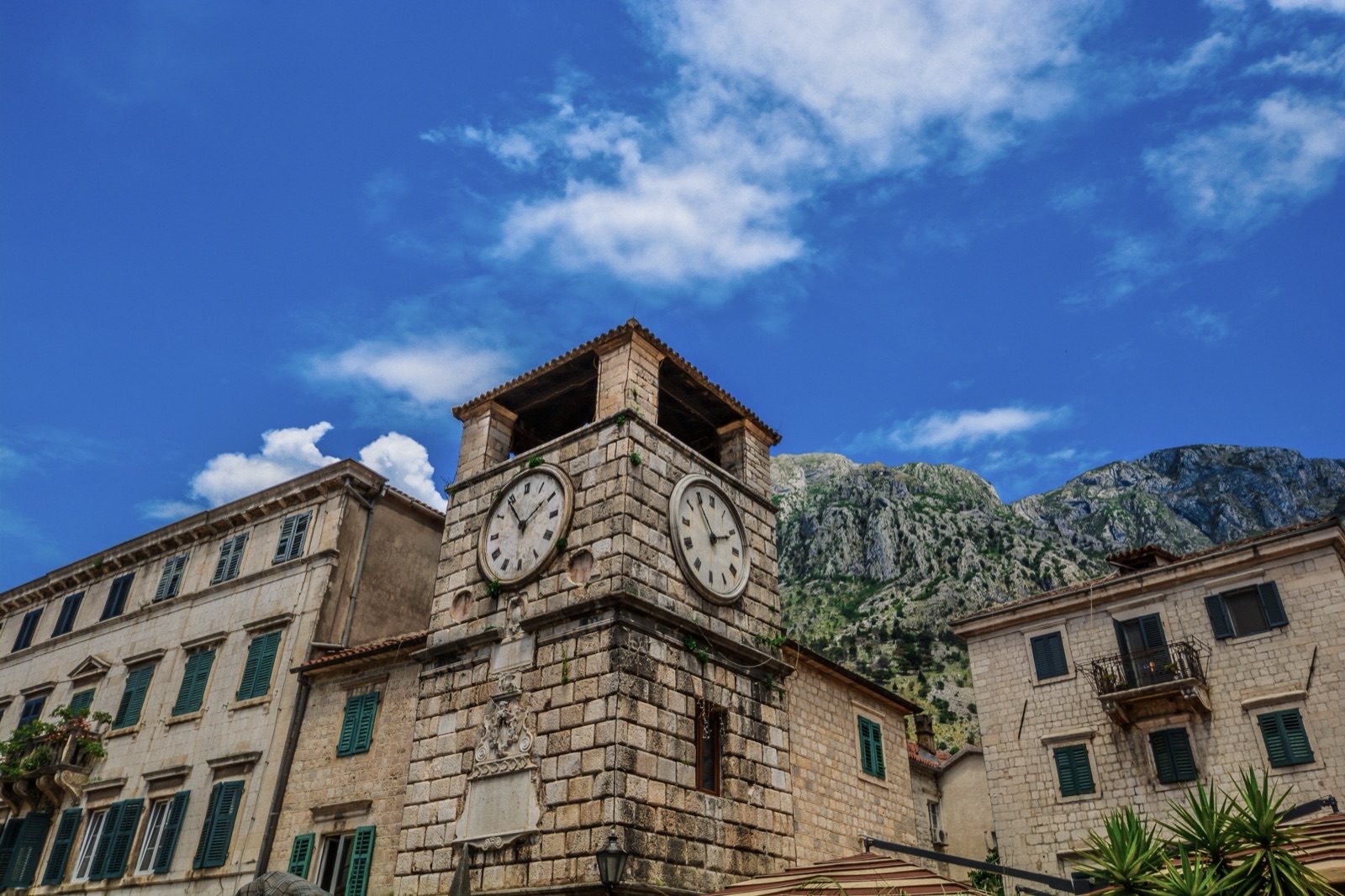
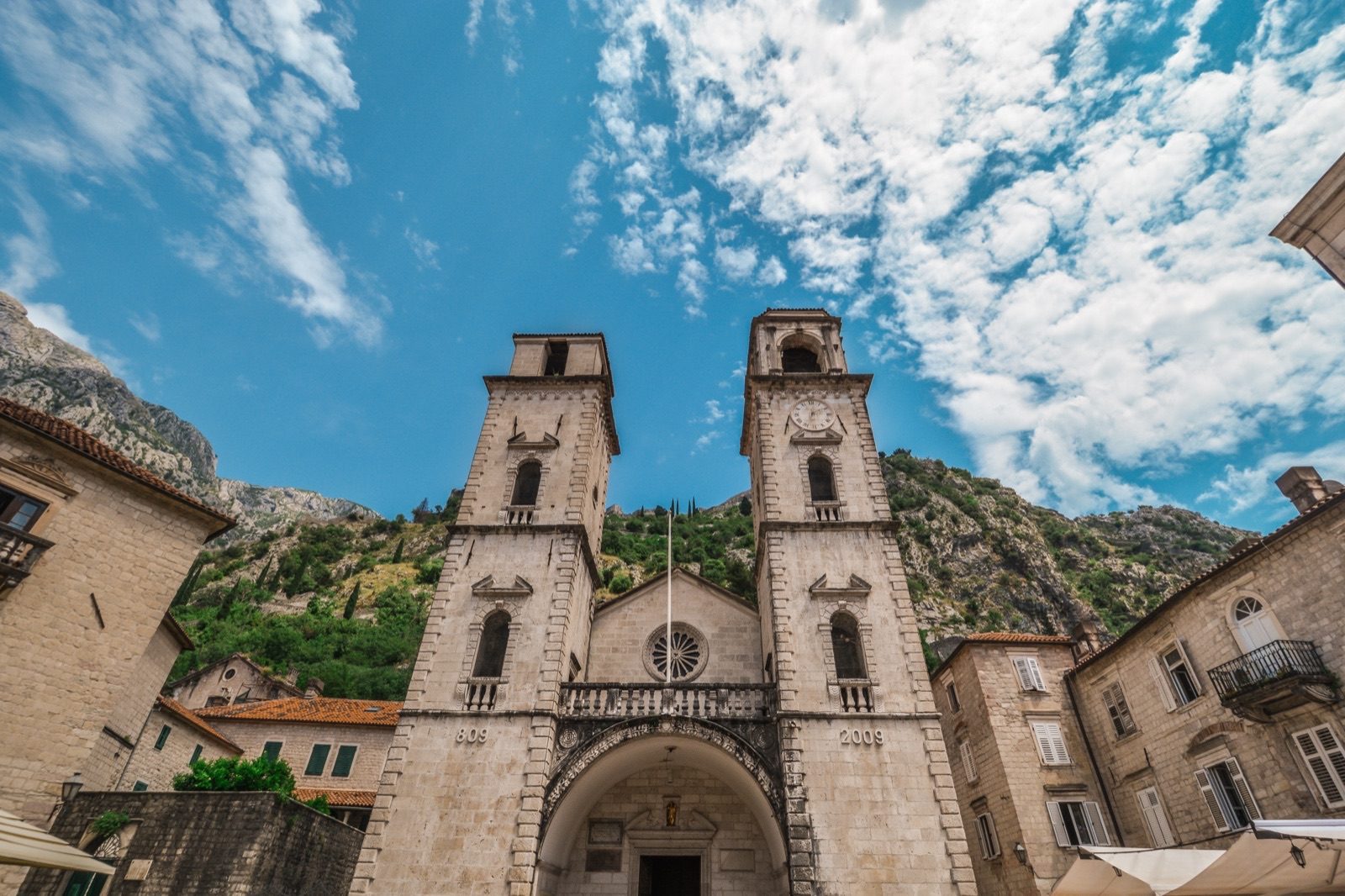
I saw the city in early June, on a day trip from Dubrovnik, and we went on to Budva the same afternoon. It was thirty-eight degrees. Three of those pictures are here: the Bay of Kotor, the clock tower on the Square of Arms, and the Cathedral of St Tryphon.
The Bay of Kotor, June 2015.The clock tower on the Square of Arms.The Cathedral of St Tryphon.
What’s real
Kotor is a real town, and you can walk most of this book's streets. The old town sits at the head of the Bay of Kotor, pressed between the water and the mountain, inside its Venetian walls. You come in by the Sea Gate, the River Gate over the Škurda, or the Gurdić Gate at the southern end. Inside are St Luke's Square, the Square of Flour with the Pima palace, the Square of Arms with its clock tower, St Mary's and the Cathedral of St Tryphon.
From the back corners of the old town, two lines of wall climb the mountain to the fortress of San Giovanni, also called St John's Fortress. About thirteen hundred and fifty steps go up with them, and the little church of Our Lady of Remedy stands halfway. Outside the walls, the old mule track climbs the mountain in switchbacks, up to the ruins of Špiljari. North of the town, Dobrota runs along the shore with its captains' houses, and Lovćen stands over the whole bay.
Venice held Kotor for nearly four hundred years, and its winged lion is still carved over the Sea Gate. The earthquake in the book's opening pages is real too. It struck the coast of Montenegro early on the morning of 15 April 1979.
What’s invented
The key is invented, and so is whatever it opens. All the people are invented too, and so are Mato's konoba, the hostel by the River Gate, the hotel in the Luković house and the churchyard of St Matthew's in Dobrota.
About the author
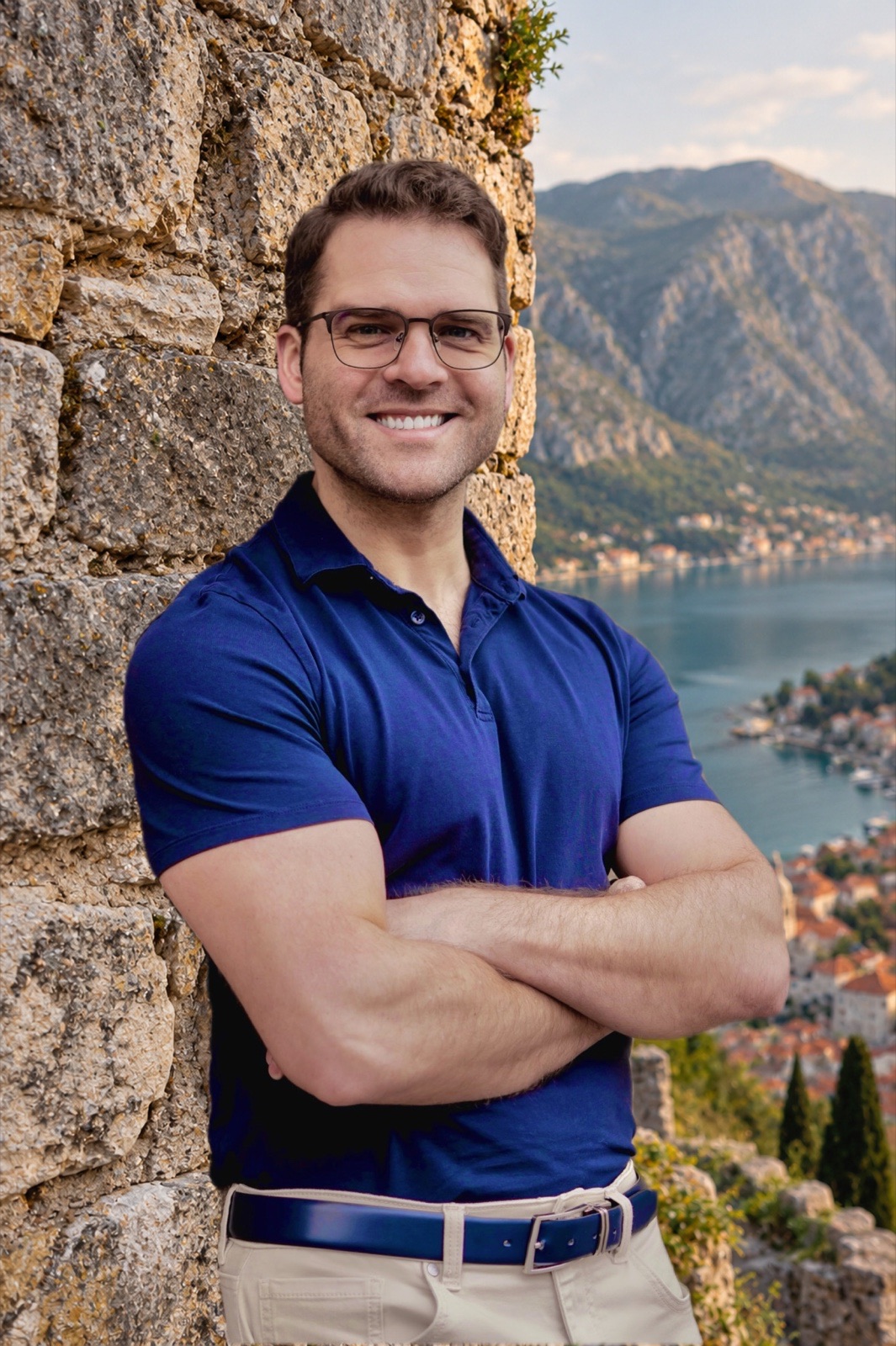
Andrew has been to Kotor, and he sets his novels only in places he has been himself.
Hear when it’s ready
The Killer of Kotor is finished and being prepared for release. Leave an address and I will write when the book is ready to read. If you would like to read it early and tell me the truth about it, tick the box.