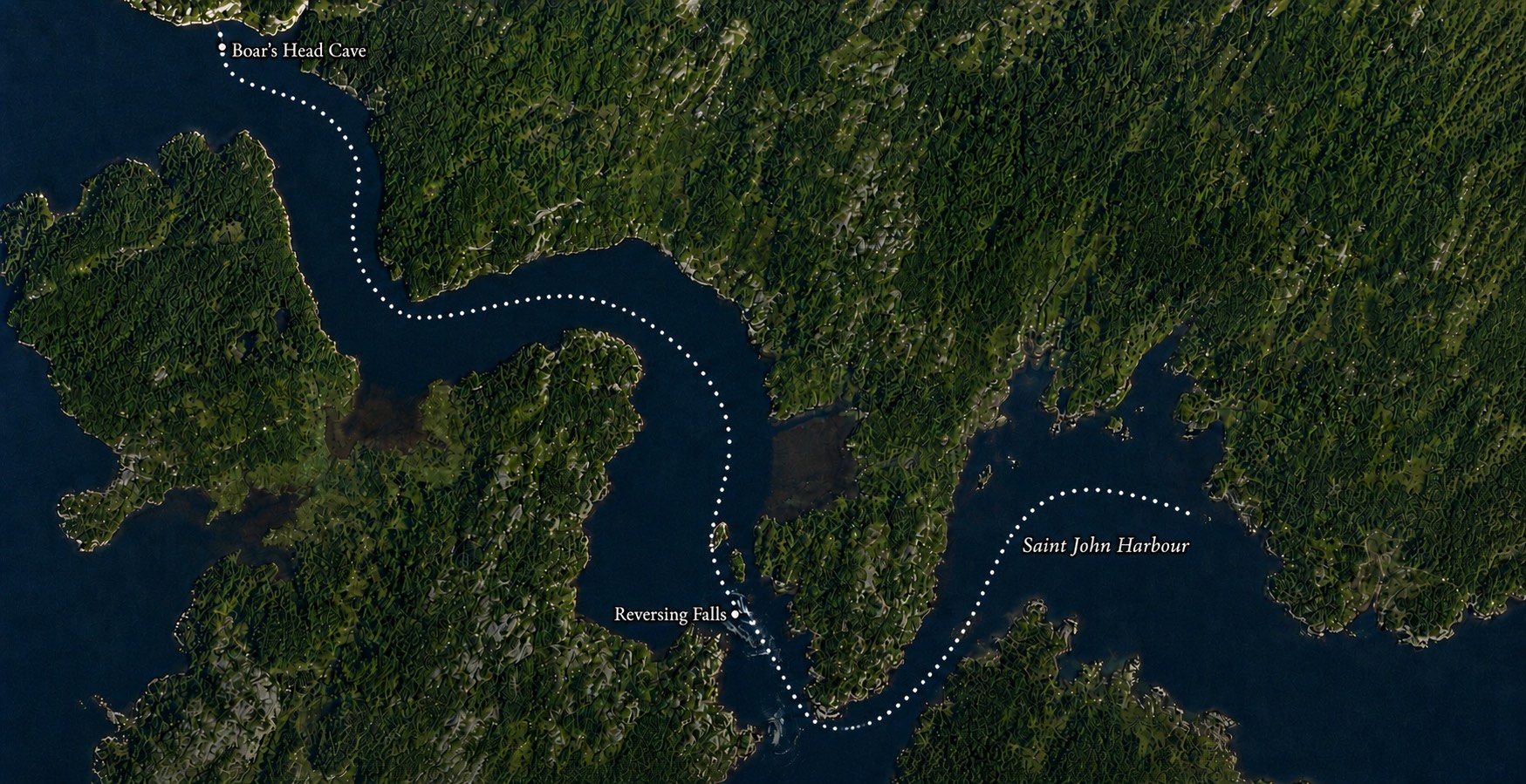
The same passage the recording covers. It stops where the first scene does.
Prologue · June 1604
Pierre Bennart sat alone in the dark belly of the Don de Dieu and hated every plank of her.
Rain came down the hatchway in ropes. Above him boots pounded the deck and men bellowed into the wind; down here there was only the groan of wet timber and the sea against the hull. Two months. Two months of rotten biscuit and black water, of hauling rope until his hands split and sleeping where the bilge could reach him — and this was where it had led: a drowned coast at the edge of the world, with a storm trying to finish what the crossing had started.
He had believed every word, once.
Champlain had come down the quay at Honfleur in a good coat, talking about the New World as though he owned it and only needed help carrying it home. Riches for every man who sailed, glory enough to spill over onto deckhands. Pierre had signed that same afternoon, and half the men aboard had signed on the strength of that voice. Two months had shown him what the voice was worth: the great man dined aft and drew his charts, and if a crewman coughed blood or lost a finger to a frozen line, it went into no notebook anywhere. To Samuel de Champlain, a crew was cargo that loaded itself.
His mother had believed the promises too. That was the blade of it. She had pressed her locket into his hand on that same quay — small, gold, older than she was — and told him to come home rich or come home anyway. He crossed the estuary to Le Havre the next morning, where the ships lay. A thousand leagues later, the locket was all of it he had left.
He fastened it around his neck and thought about the case.
He'd watched it come aboard that last morning at Le Havre — a royal messenger in the King's colours, an escort with pikes, a locked case passed into Champlain's own hands with nothing said above a murmur. It had gone straight to the great cabin and stayed there, spoken of only in the careful voice of officers who knew better than to ask.
A man didn't guard an empty box like that.
Gold, maybe. Papers worth more than gold. It hardly mattered. Whatever the King had trusted to Champlain, a man who lost it would answer to the King for it. Let the great man sail home and explain the empty space under his bunk. And if it bought a new life for a deckhand far from here, that was only the wage Pierre had been promised in the first place.
The ship pitched and threw him against the bulkhead. Lightning came white through the deck seams; for half a heartbeat the hold stood up around him, barrels straining at their lashings, and then it was black again. On deck someone was screaming orders — Gravé Du Pont, his voice torn ragged by the wind.
Secure the masts! Batten the hatches! Hold fast!
Every hand aboard was up there now, or wanted there. No one was thinking about the great cabin. No one was thinking about Pierre at all.
He got to his feet and pulled his seabag out from under the hammock.
—